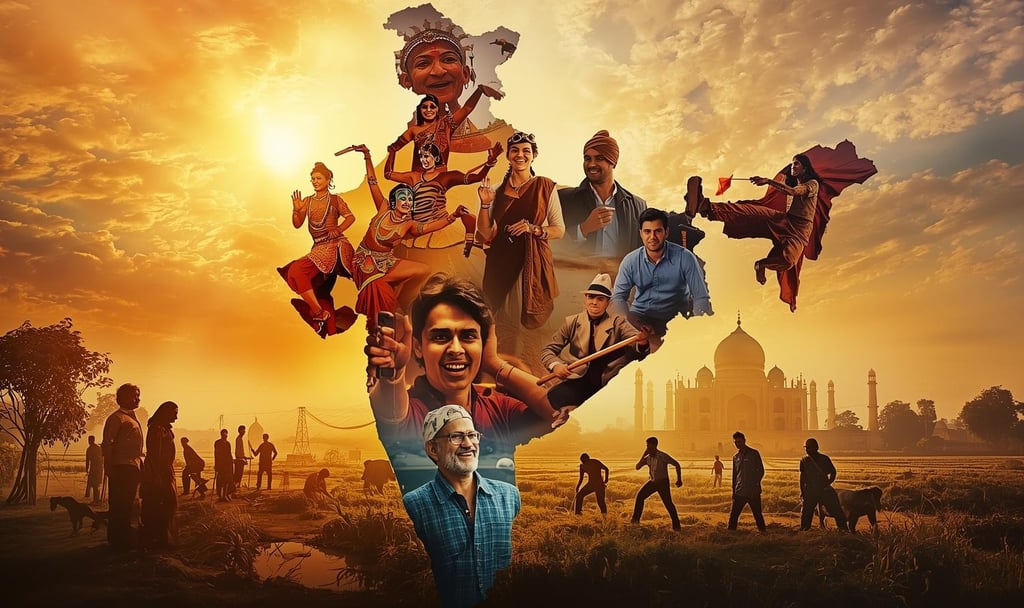
Indian Folk Culture: A Tapestry of Diversity

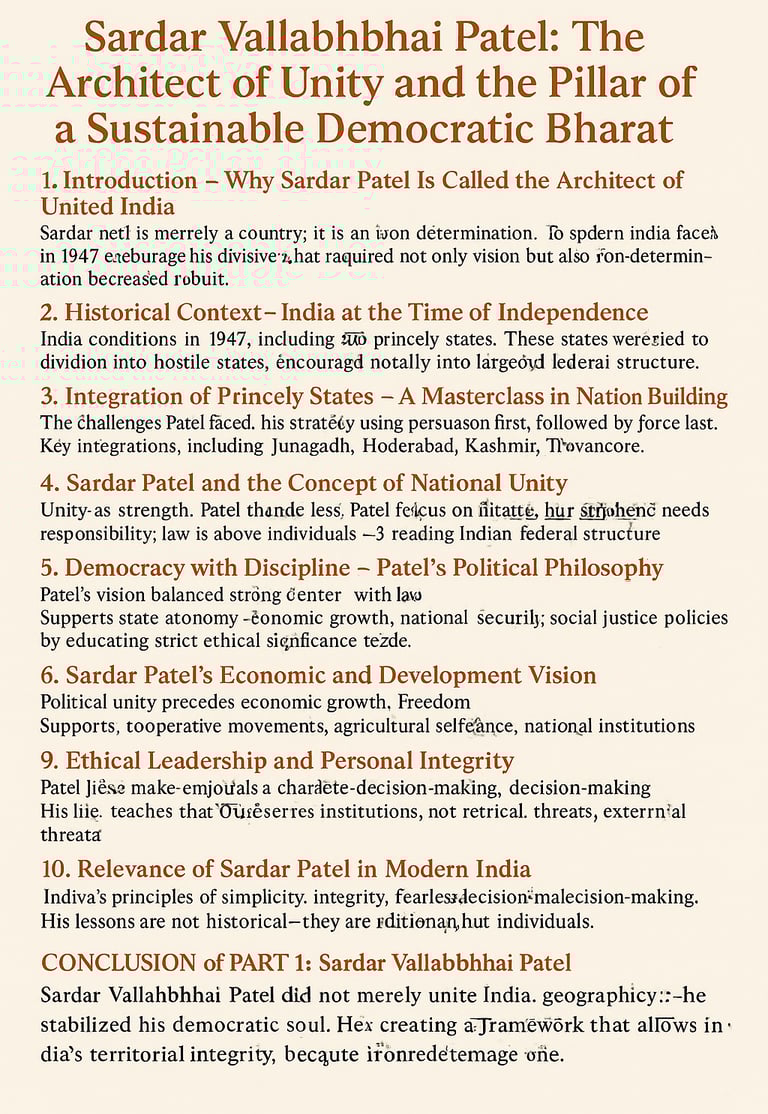
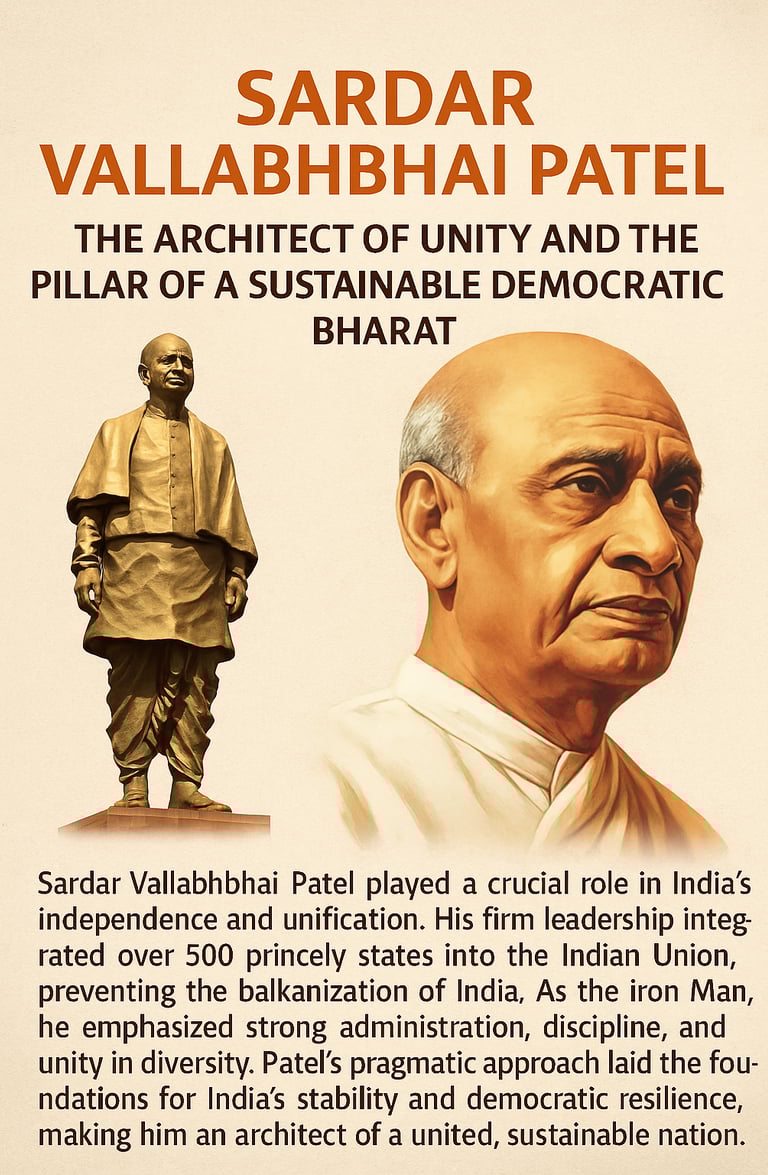
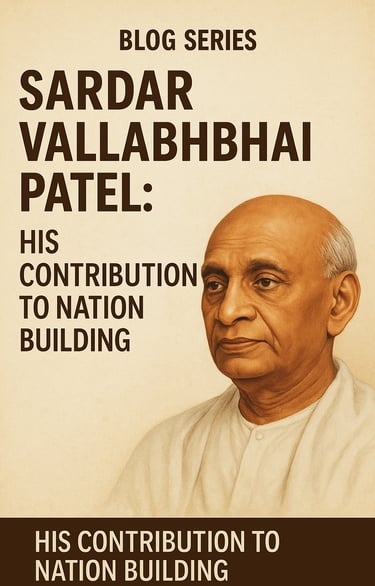
Sardar Vallabhbhai Patel: The Architect of Unity and the Pillar of a Sustainable Democratic Bharat
Sardar Vallabhbhai Patel: Ji Part 1
Gajanan L. Bhonde
12/16/20259 min read


Introduction: The Historical Context of Pre-Independent India
The landscape of India prior to its independence in 1947 was characterized by a vast and complex political framework. British India was not merely a collection of provinces but was interspersed with numerous princely states, each governed by its own local rulers under varying degrees of British control. This situation led to a diverse array of political systems, cultures, and administrative practices, creating both ideological divides and opportunities for unification. The British colonial regime further exacerbated these divisions through policies that often favored local rulers over popular movements for self-governance, thereby complicating the path towards independence.
The struggle for independence began to coalesce with the efforts of various Indian leaders, who represented a multitude of interests—from the mainstream Congress party advocating for a united India to regional factions emphasizing their autonomist aspirations. The role of Sardar Vallabhbhai Patel, often regarded as the iron man of India, was instrumental during this tumultuous period. As an adept statesman and negotiator, Patel understood that the unification of princely states would be critical to forge a cohesive national identity post-independence. His belief that true independence could only be achieved through unity laid the groundwork for his later efforts in consolidating India.
The challenges that Patel faced were immense, ranging from language barriers and cultural differences to apprehensions among the princely states regarding their futures in the new democratic framework. The ideological complexities of accommodating diverse political voices while ensuring coherent governance were significant. Consequently, as the transition from colonial rule began, the importance of strategic dialogue and diplomatic engagement was heightened, highlighting the delicate balance that Patel had to maintain between integration and autonomy. Understanding this historical milieu is essential to appreciating Patel’s legacy as a pivotal architect in shaping a unified and sustainable democratic Bharat.
Sardar Vallabhbhai Patel: A Brief Biography
Sardar Vallabhbhai Patel, born on October 31, 1875, in a small village in Gujarat, emerged as one of India's most prominent leaders during the struggle for independence. The son of a justice of a district court, Patel's early life was marked by simplicity and humility. He displayed a strong inclination towards academics, ultimately pursuing law studies at London’s Middle Temple, which laid the foundation for his future political career. Upon returning to India, Patel started a successful law practice in Ahmedabad, but he soon found himself drawn to the plight of the common people and the burgeoning Indian independence movement.
Patel's political awakening began in the early 1900s, coinciding with the rise of the Indian National Congress. His initial involvement in the movement centered around agrarian issues, wherein he tirelessly advocated for farmers' rights against oppressive policies imposed by the British. His leadership during the Kheda Satyagraha in 1918 showcased his unparalleled ability to rally communities for a common cause, reinforcing his reputation as a robust orator and strategist.
Through these efforts, Patel developed a vision for India predicated on unity and civic engagement. He believed that a strong, united India could only be achieved through mutual cooperation and understanding among its diverse populations. His ideologies emphasized compromise and consensus-building, which became guiding principles during the tumultuous years leading up to India's independence in 1947.
After independence, Patel played an instrumental role as India's first Deputy Prime Minister and Minister of Home Affairs. He was paramount in the successful integration of over 500 princely states into the Indian Union. His adept diplomatic skills and steadfast resolve to foster unity made Sardar Vallabhbhai Patel not just a pivotal figure in India's independence movement, but also a cornerstone of the nation's democratic ethos.
The Challenge of Fragmentation: India's Princely States
At the time of India’s independence in 1947, the country was characterized by a complex tapestry of political entities, with over 560 princely states operating as autonomous regions. These states were princely territories ruled by local monarchs, each possessing distinct political interests, cultural identities, and administrative systems. This fragmentation presented a significant challenge to national unity and posed potential threats to the consolidation of a democratic Bharat.
The rulers of these princely states often held varying degrees of allegiance to the newly formed Indian government. Some leaders were inclined to maintain their independence, while others were more amenable to joining the Indian Union. Consequently, this disparity in willingness among the rulers complicated negotiations for accession, with certain states hesitating to align with a central authority. Such divisions not only threatened the nascent political landscape but also raised concerns about the viability of a unified nation-state.
Additionally, the sociopolitical conditions within these princely states contributed to the challenge of integration. Each state had its unique historical context, influencing the ruler's governance style and their subjects' loyalties. This intricate situation necessitated a delicate balancing act by the Indian leadership, particularly by Sardar Vallabhbhai Patel, who was appointed as the Deputy Prime Minister and the Minister of Home Affairs. Patel's strategic interventions were crucial in addressing the issues stemming from fragmentation, as he employed negotiations, persuasion, and, when necessary, decisive action to encourage accession to the Indian Union.
The ramifications of these preparatory efforts on national integration were profound. Patel's methodology not only curbed potential upheavals but also fostered an environment conducive to forming a cohesive nation-state. The successful integration of these diverse regions demonstrated the significance of strong leadership during a transitional period marked by fragmentation, ultimately supporting the goal of a democratic and united Bharat.
Strategic Diplomacy: Patel's Approach to Integration
Sardar Vallabhbhai Patel's approach to integration during the tumultuous period following India's independence was marked by exceptional strategic diplomacy. His emphasis on negotiation and communication played a crucial role in facilitating the accession of over five hundred princely states to the Indian Union. Patel understood that these states were not merely political entities but also represented the rich mosaic of India's diverse cultural and historical heritage. Thus, his diplomatic strategies were designed with a deep sense of respect for this diversity.
One of Patel's notable strategies was establishing direct communication with the rulers of these princely states. By leveraging diplomacy, he fostered relationships based on mutual respect and understanding. His ability to listen empathetically allowed him to identify the concerns of the rulers, paving the way for constructive dialogues. For instance, during negotiations with the Nawab of Junagadh, Patel's commitment to recognizing the local populace's wishes helped resolve the contentious issue peacefully. His insistence on a plebiscite was a crucial element in demonstrating his respectful approach, showcasing his conviction in democratic ideals despite the complexities involved.
Another example of Patel's adeptness in negotiation was his handling of the affairs of Hyderabad. Recognizing the strategic significance of this princely state, he skillfully navigated through the challenges posed by its ruler, the Nizam. By balancing firmness with diplomacy, Patel successfully secured Hyderabad's accession to India, thus emphasizing his overarching goal of national unity. His methods reflected an understanding of the socio-political context, utilizing both persuasion and, when necessary, direct intervention to achieve peaceful resolutions.
In essence, Patel's diplomatic approach was characterized by a steadfast commitment to integration coupled with intelligent negotiation tactics. His ability to combine compassion with firmness ensured that the accession of states to the Indian Union was achieved largely without bloodshed. This strategic diplomacy not only solidified India's unity but also laid the foundation for a sustainable democratic framework within the newly formed nation.
The Role of the Police Action: A Turning Point
The period following India’s independence was marked by significant challenges, particularly the integration of numerous princely states into the newly formed nation. Among these states, Hyderabad emerged as a prominent issue due to its resistant stance towards joining the Indian Union. The decision to initiate 'police action' in Hyderabad was not taken lightly by Sardar Vallabhbhai Patel, who played a pivotal role in these events. Patel understood that the unification of the country was crucial for political stability and sustainable governance.
Hyderabad, ruled by the Nizam, sought to maintain its sovereignty, which posed a direct threat to national integrity. Patel's strategic decision to employ police action in September 1948 was fueled by the need for a decisive resolution to this challenge. His approach was multifaceted, involving military maneuvers that were simultaneously complemented by political negotiations. The operation, titled 'Operation Polo,' aimed to liberate Hyderabad from the Nizam's rule, showcasing Patel's belief in using force only as a last resort when all other avenues had been exhausted.
The police action had far-reaching implications for national unity and governance. The swift military response not only facilitated the integration of Hyderabad into India but also sent a strong message to other princely states contemplating resistance. The successful operation was instrumental in consolidating Patel’s reputation as a decisive leader, ultimately earning him the moniker 'The Iron Man of India.' Furthermore, the political aftermath paved the way for improved governance structures in integrating states. Patel’s policies emphasized the importance of maintaining law and order, which became foundational for future governance in the region.
In essence, the police action in Hyderabad marked a critical turning point in India's early years post-independence, shaping the trajectory of unified governance and laying the groundwork for a stable democratic state.
Patel's Vision for a Democratic Bharat
Sardar Vallabhbhai Patel, a prominent leader in the Indian independence movement, envisioned a democratic Bharat characterized by inclusivity, governance, and communal harmony. His commitment to creating a strong, unified nation was manifested through his emphasis on the importance of civil rights and the idea of equitable representation for diverse communities. Patel firmly believed that a true democracy could only thrive if all citizens, regardless of their background, had a sense of belonging and agency in the governance processes.
In Patel's vision, the foundation of democracy lay in decentralized governance structures that facilitated local participation. He advocated for administrative decentralization, ensuring that decision-making powers were not concentrated in a single entity but shared among local authorities. This approach was aimed at fostering accountability and enabling communities to contribute to their governance actively. By empowering local bodies, Patel sought to cultivate a sense of political awareness and responsibility among citizens.
Furthermore, Sardar Patel recognized the significance of communal harmony as a critical component of a democratic society. His efforts in the integration of princely states post-independence showcased his commitment to unifying the country while respecting the cultural diversity that existed within it. He argued that democracy could flourish only when people worked together, disregarding their differences. His focus on promoting mutual respect and understanding among various communities helped lay the groundwork for a collaborative societal framework.
Ultimately, Patel’s ideas on governance, civil rights, and inclusivity served as key principles shaping the democratic structure of India. His vision encourages contemporary society to reflect on the importance of unity amidst diversity and the ongoing commitment to foster a more inclusive democratic process. The ideals he championed remain relevant today, emphasizing the continuous work required to create a truly democratic Bharat.
Legacy and Continuing Relevance of Patel's Ideas
Sardar Vallabhbhai Patel’s legacy is etched deeply into the fabric of modern India, marking him as an enduring symbol of unity and governance. His strategic vision was instrumental in the integration of over 500 princely states into a cohesive nation, an act that laid the groundwork for a united and democratic Bharat. Patel's commitment to national integrity stems from his belief in the strength of diversity, which remains a poignant lesson for contemporary policymakers navigating the complexities of our multicultural society.
Today, the relevance of Patel's ideas is more significant than ever. In an age where divisive politics and social fragmentation can threaten democratic ideals, Patel’s emphasis on inclusivity over exclusion serves as a guiding principle. His approach to resolving conflicts is evident in various contemporary scenarios, where dialogue and negotiation are essential for fostering social harmony. Policymakers can glean valuable insights from Patel’s tactics for cultivating cohesion among diverse groups, ensuring that all voices are represented in the democratic process.
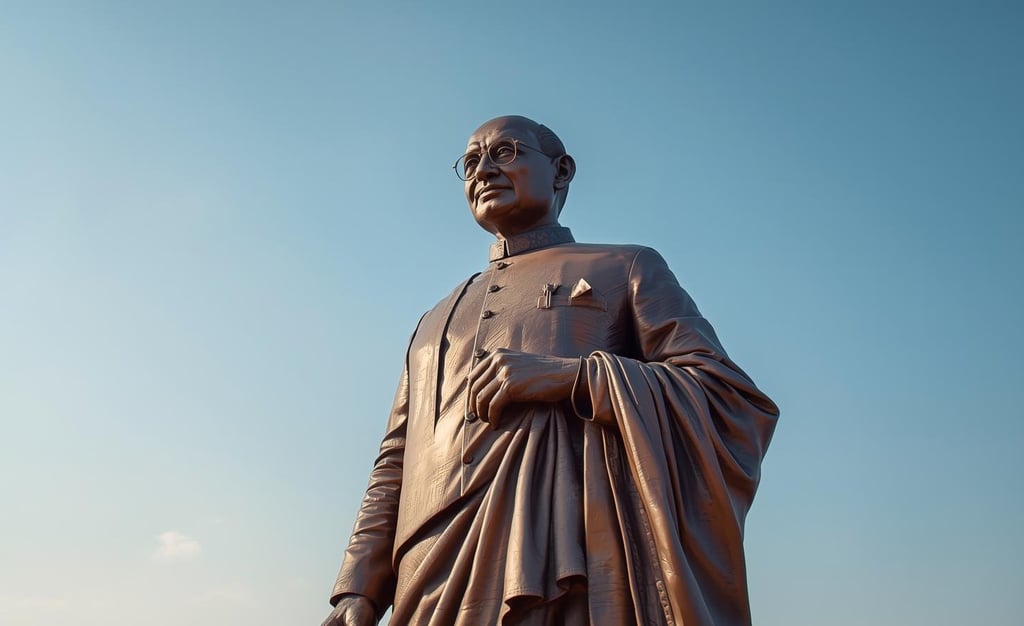
Patel is commemorated through numerous institutions, statues, and events, most notably the Statue of Unity, which serves not only as a tribute but also as a reminder of his contributions. This iconic monument in Gujarat symbolizes his vision for a united nation and attracts visitors, promoting discussions around his philosophies and their applicability in today's governance. Educational initiatives highlighting Patel's work continue to inspire newer generations, encouraging them to actively participate in democracy and embrace the principles of unity and resilience.
Looking ahead, the lessons drawn from Sardar Vallabhbhai Patel’s life resonate through the ongoing discourse on nation-building and democratic governance. His emphasis on strong leadership, resolute action, and inclusive policies serves as a framework for leaders aspiring to navigate the challenges of unity in the face of diversity. Thus, Patel's ideologies remain an invaluable asset as India continues to grow and evolve in the global landscape.